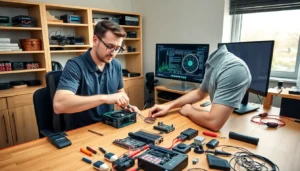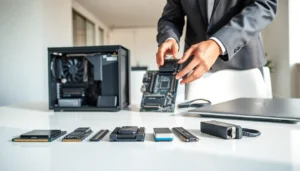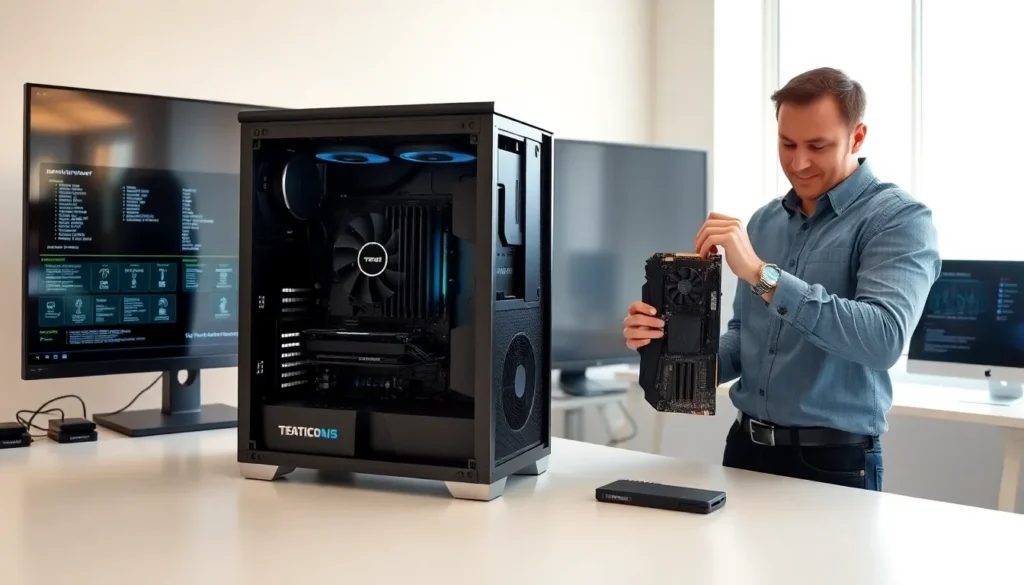

This hardware guide breaks down everything readers need to know about computer components, whether they’re building their first PC or upgrading an existing setup. Understanding hardware matters because it directly affects performance, longevity, and value. From CPUs to storage drives, each component plays a specific role. This guide covers essential parts, selection strategies, the build-vs-buy debate, and maintenance best practices. By the end, readers will have the knowledge to make confident hardware decisions.
Table of Contents
ToggleKey Takeaways
- This hardware guide helps you understand how CPUs, GPUs, RAM, and storage work together to affect your computer’s performance and value.
- Match your hardware to your primary use case—gaming builds should prioritize GPU spending, while productivity setups benefit from stronger CPUs and more RAM.
- Building a custom PC offers cost savings and full control over components, while pre-built systems provide convenience and comprehensive warranties.
- Use an SSD for your operating system and frequently used programs to significantly improve boot times and responsiveness.
- Regular maintenance like dust removal, temperature monitoring, and driver updates extends hardware lifespan and prevents performance issues.
- Always check component compatibility and identify system bottlenecks before upgrading to avoid wasting money on unnecessary parts.
Essential Computer Hardware Components Explained
Every computer relies on a handful of core components working together. Here’s what each one does and why it matters.
The CPU (Central Processing Unit)
The CPU acts as the brain of any computer. It processes instructions and handles calculations for every task. Modern CPUs from AMD and Intel offer multiple cores, which allow them to handle several tasks simultaneously. A faster CPU means quicker load times, smoother multitasking, and better overall performance.
For everyday use, a mid-range processor works fine. Gamers and content creators should consider higher-end options with more cores and faster clock speeds.
The GPU (Graphics Processing Unit)
The GPU handles visual processing. It renders images, videos, and 3D graphics. Integrated graphics built into CPUs work for basic tasks. Dedicated graphics cards from NVIDIA or AMD deliver the power needed for gaming, video editing, and 3D modeling.
This hardware guide recommends matching the GPU to intended use. Casual users don’t need expensive cards. Gamers should budget accordingly based on their target resolution and frame rates.
RAM (Random Access Memory)
RAM provides temporary storage for active programs and data. More RAM allows computers to run multiple applications without slowing down. Most users need 16GB for general use. Content creators and gamers benefit from 32GB or more.
RAM speed also affects performance, though capacity usually matters more for most users.
Storage: SSDs vs. HDDs
Storage drives hold operating systems, programs, and files. Traditional hard disk drives (HDDs) offer large capacities at low prices. Solid-state drives (SSDs) deliver faster read and write speeds.
This hardware guide suggests using an SSD for the operating system and frequently used programs. An HDD can store larger files like videos and backups. NVMe SSDs offer even faster speeds than standard SATA SSDs.
The Motherboard
The motherboard connects all components together. It determines which CPUs, RAM types, and expansion cards a system can use. Choosing the right motherboard ensures compatibility and provides room for future upgrades.
The Power Supply Unit (PSU)
The PSU delivers electricity to all components. A quality PSU with adequate wattage prevents crashes and protects hardware. Users should calculate their system’s power needs and add 20% headroom.
How to Choose the Right Hardware for Your Needs
Selecting hardware depends on intended use, budget, and future plans. This hardware guide outlines key considerations for different user types.
Define the Primary Use Case
Office work and web browsing require modest specs. A basic CPU, 8-16GB RAM, and integrated graphics handle these tasks easily. Gaming demands more GPU power and benefits from faster CPUs. Video editing and 3D work need strong CPUs, ample RAM, and capable GPUs.
Starting with the primary use case prevents overspending on unnecessary power or underspending on critical components.
Set a Realistic Budget
Hardware prices vary widely. Setting a budget helps narrow options quickly. Allocating funds properly matters more than the total amount. A $1,000 build with balanced components outperforms a $1,500 build that overspends on one part.
This hardware guide recommends allocating roughly 30-40% of the budget to the GPU for gaming builds. Productivity builds should prioritize the CPU and RAM instead.
Consider Future Upgrades
Buying hardware with upgrade paths saves money long-term. Motherboards that support newer CPUs, cases with extra drive bays, and PSUs with headroom all extend a system’s useful life.
Check Compatibility
Not all components work together. CPUs require specific motherboard sockets. RAM must match the motherboard’s supported speeds and generation. Graphics cards need adequate PSU wattage and physical space.
Online compatibility checkers simplify this process. They flag conflicts before purchase.
Building vs. Buying Pre-Built Systems
The build-vs-buy decision affects cost, customization, and convenience. Both options have merits.
Advantages of Building Custom
Building a PC offers complete control over component selection. Builders choose exactly what goes into their system. This approach typically costs less than equivalent pre-built options. Custom builds also teach valuable skills about how hardware works together.
This hardware guide notes that building has become more accessible. Plenty of tutorials exist, and components are designed for easy installation.
Advantages of Pre-Built Systems
Pre-built computers arrive ready to use. They include warranties covering the entire system. Some manufacturers offer support services that custom builders don’t receive.
Pre-builts make sense for users who value convenience over customization. They also work well when component prices spike, as manufacturers often secure bulk pricing.
Making the Decision
Those comfortable with research and hands-on work should consider building. The experience is rewarding, and the savings add up. Those who prefer plug-and-play simplicity or lack time should explore pre-built options.
Either path leads to a functional computer. The best choice depends on individual priorities.
Hardware Maintenance and Upgrade Tips
Proper care extends hardware lifespan and maintains performance. These practices keep systems running smoothly.
Keep Components Clean
Dust accumulates inside computer cases. It clogs fans and blocks airflow, causing higher temperatures. Compressed air removes dust from heatsinks, fans, and vents. Cleaning every few months prevents heat-related issues.
Monitor Temperatures
High temperatures damage components over time. Free software tracks CPU and GPU temperatures during use. Temperatures consistently above safe ranges indicate cooling problems that need attention.
Update Drivers and Firmware
Manufacturers release updates that fix bugs and improve performance. GPU drivers, in particular, often boost game performance. BIOS updates for motherboards add features and improve stability.
Plan Upgrades Strategically
Upgrading one component often makes more sense than replacing an entire system. Adding RAM costs little and delivers noticeable improvements for multitasking. Swapping an HDD for an SSD dramatically speeds up boot times and program loading.
This hardware guide recommends identifying the bottleneck before upgrading. A slow CPU limits even the best GPU. Upgrading the wrong component wastes money.
Backup Important Data
Storage drives eventually fail. Regular backups to external drives or cloud services protect valuable files. Redundancy prevents data loss during hardware failures.