
Good hardware tips can extend the life of a computer by years. They can also boost performance without spending a dime. Most users focus on software fixes when their machines slow down. But often, the real problem sits inside the case, dust, heat, outdated firmware, or worn components.
This guide covers practical hardware tips that anyone can follow. From cleaning routines to smart upgrades, these strategies help computers run faster and last longer. Whether the machine is a gaming rig, a workstation, or a family PC, these methods apply across the board.
Table of Contents
ToggleKey Takeaways
- Clean your computer every 3-6 months with compressed air to prevent dust buildup, which traps heat and shortens component lifespan.
- Ensure proper ventilation by keeping at least four inches of clearance around vents and maintaining balanced intake and exhaust airflow.
- Update graphics drivers monthly and check firmware regularly to fix bugs, improve stability, and boost performance by up to 15%.
- Prioritize strategic upgrades: an SSD offers the biggest performance boost, followed by RAM for multitasking improvements.
- Always ground yourself before handling internal components to prevent static electricity from damaging sensitive hardware.
- Use surge protectors and maintain regular backups to protect against power spikes and inevitable drive failures.
Keep Your Hardware Clean and Dust-Free
Dust is the silent killer of computer hardware. It builds up inside cases, clogs fans, and creates an insulating layer over components. This layer traps heat and forces parts to work harder than they should.
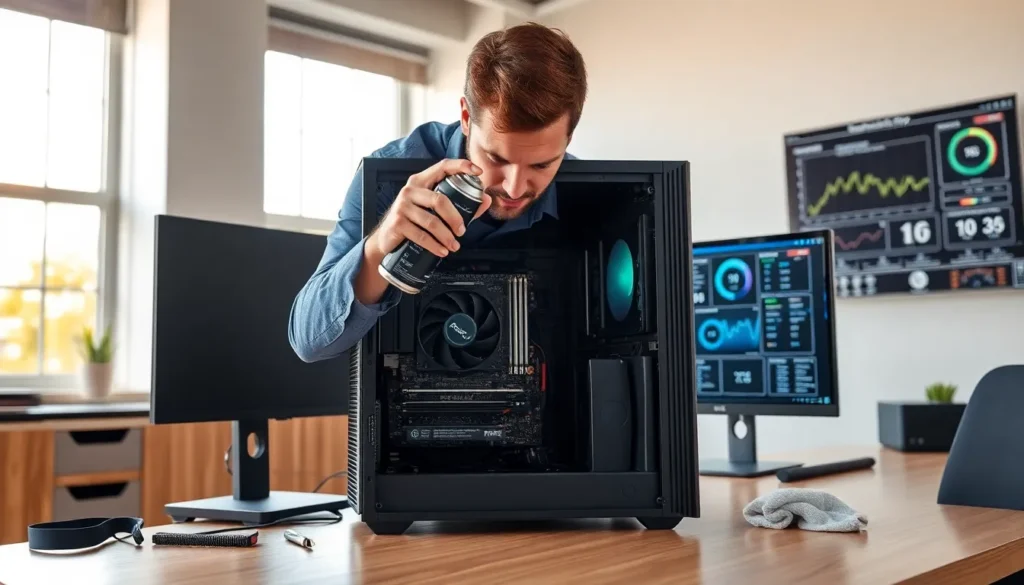
One of the simplest hardware tips is to clean the system every three to six months. A can of compressed air works well for most cleaning tasks. Users should power down the machine, unplug it, and open the case. Then they can blow dust away from fans, heatsinks, and vents.
Some spots need extra attention:
- CPU cooler fins – Dust collects between the thin metal blades and blocks airflow
- GPU fans and shroud – Graphics cards generate significant heat and need clear airflow
- Power supply intake – A clogged PSU fan can cause shutdowns or damage
- Case filters – Many modern cases have removable filters that should be rinsed or vacuumed
For deeper cleaning, users can remove components and use isopropyl alcohol (90% or higher) on stubborn grime. Cotton swabs help reach tight spaces around capacitors and connectors.
Pets and carpeted rooms increase dust accumulation. Systems in these environments may need monthly cleaning. Elevating the computer off the floor also reduces the dust it pulls in.
Ensure Proper Ventilation and Cooling
Heat degrades hardware faster than almost anything else. Processors and graphics cards throttle their speeds when temperatures climb too high. Over time, excessive heat can damage solder joints, shorten component lifespans, and cause random crashes.
Proper ventilation starts with case placement. Computers need space around their vents, at least four inches on all sides. Shoving a tower into an enclosed desk cabinet is a recipe for overheating.
Airflow inside the case matters just as much. Most setups benefit from a front-to-back or bottom-to-top airflow pattern. Intake fans pull cool air in, and exhaust fans push hot air out. A balanced configuration, equal intake and exhaust, prevents dust buildup and maintains steady temperatures.
These hardware tips improve cooling without major expense:
- Add case fans – Even one additional fan can drop temperatures by 5-10°C
- Replace thermal paste – After three to five years, thermal compound dries out and loses effectiveness
- Use a laptop cooling pad – External fans help portable machines that lack internal airflow space
- Check fan curves – BIOS settings or software can adjust fan speeds based on temperature
Monitoring temperatures helps catch problems early. Free tools like HWiNFO or Core Temp display real-time readings. CPUs should stay below 80°C under load, and GPUs below 85°C. Higher numbers suggest cooling issues that need attention.
Update Drivers and Firmware Regularly
Outdated drivers cause compatibility issues, security vulnerabilities, and performance losses. Manufacturers release updates to fix bugs, improve stability, and sometimes boost speeds. Ignoring these updates leaves performance on the table.
Graphics drivers deserve special attention. NVIDIA and AMD release updates monthly, often with optimizations for new games and applications. These updates can improve frame rates by 5-15% in some titles.
Firmware updates matter too. BIOS updates for motherboards can add support for new processors, fix memory compatibility issues, and improve system stability. SSD firmware updates sometimes unlock faster speeds or fix reliability problems.
Some practical hardware tips for managing updates:
- Check manufacturer websites directly – Built-in Windows updates don’t always provide the latest versions
- Create a restore point before major updates – This allows rollback if something goes wrong
- Update BIOS carefully – A failed BIOS update can brick a motherboard, so users should follow instructions exactly
- Keep a schedule – Monthly driver checks prevent falling too far behind
Automatic update tools from manufacturers simplify this process. GeForce Experience, AMD Software, and Intel Driver Support Assistant scan systems and install appropriate drivers. These tools save time and reduce the risk of installing wrong versions.
Upgrade Components Strategically
Not every upgrade delivers equal value. Smart hardware tips focus on components that create bottlenecks, the parts limiting overall system performance.
RAM upgrades offer immediate benefits for multitasking. Systems with 8GB often struggle with modern workloads. Jumping to 16GB or 32GB allows more browser tabs, larger files, and smoother application switching. This upgrade typically costs under $50 and takes five minutes to install.
Storage upgrades transform slow machines. Replacing a mechanical hard drive with an SSD cuts boot times from minutes to seconds. Application load times improve dramatically. NVMe drives offer even faster speeds for users who transfer large files regularly.
Here’s a general priority order for upgrades:
- SSD – The single biggest performance improvement for systems still using hard drives
- RAM – Essential if the system frequently runs out of memory
- GPU – Important for gaming, video editing, and 3D work
- CPU – Usually requires a new motherboard, making it expensive
- Power supply – Necessary when adding power-hungry components
Before buying anything, users should identify their actual bottleneck. Task Manager shows CPU, memory, and disk usage in real time. If one component constantly runs at 100% while others stay low, that’s the part limiting performance.
Used components can stretch budgets further. Previous-generation graphics cards often deliver 80% of the performance at 50% of the cost. Just buy from reputable sellers with return policies.
Practice Safe Handling and Maintenance
Static electricity can destroy computer components instantly. A shock that humans can’t even feel carries enough voltage to fry a processor or RAM stick. Safe handling prevents expensive accidents.
Before touching internal components, users should ground themselves. Touching a metal part of the case (while it’s plugged in but powered off) discharges static. Anti-static wrist straps provide continuous grounding during longer work sessions.
These hardware tips protect components during maintenance:
- Work on hard surfaces – Carpet generates static: wood or tile doesn’t
- Hold cards by their edges – Avoid touching gold contacts or chips directly
- Store components in anti-static bags – The original packaging works well for spare parts
- Don’t force connections – If a cable or card won’t seat easily, check the orientation
Power management extends hardware life. Surge protectors guard against voltage spikes from lightning or grid fluctuations. Uninterruptible power supplies (UPS) provide battery backup during outages, preventing data loss and allowing proper shutdowns.
Regular backups protect against hardware failure. Drives fail eventually, it’s not a question of if, but when. External drives, cloud storage, or dedicated backup software keep important files safe.
Finally, users should know when to stop. Some repairs require professional help. Attempting to fix a damaged motherboard or recover a clicking hard drive at home often makes things worse. Knowing personal limits saves money and frustration in the long run.