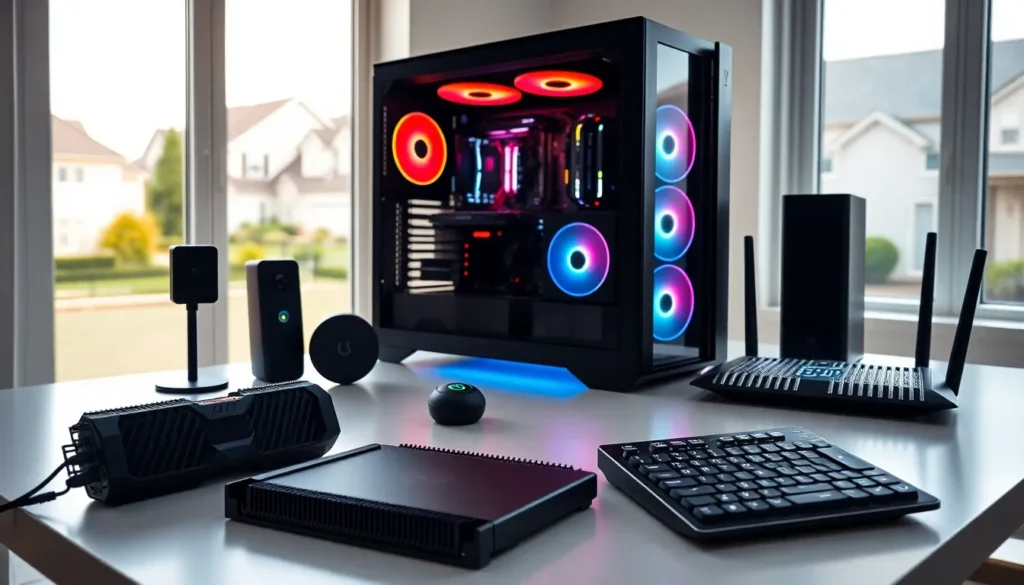

Top hardware in 2025 delivers better performance, smarter features, and real value for buyers. Technology evolves fast, and this year brings exciting upgrades across computers, smart home devices, gaming systems, and networking gear. Consumers want products that solve problems and last longer than a single product cycle. This guide covers the best hardware picks for 2025. It breaks down what matters most in each category and helps readers make informed purchasing decisions. Whether someone needs a faster processor, a smarter thermostat, or lag-free gaming, the right hardware makes all the difference.
Table of Contents
ToggleKey Takeaways
- Top hardware in 2025 focuses on performance, smart features, and long-term value across computers, smart home devices, gaming systems, and networking gear.
- PCIe 5.0 SSDs and DDR5 RAM have become mainstream, offering dramatically faster speeds at increasingly affordable prices.
- Smart home devices with Matter protocol support provide seamless interoperability between different brands, simplifying connected home setups.
- OLED gaming monitors now deliver 240Hz refresh rates with near-instant response times at more accessible price points.
- Wi-Fi 7 routers and mesh network systems eliminate dead zones and handle dozens of devices for reliable whole-home connectivity.
- Investing in quality hardware upgrades extends the life of existing systems and costs less than purchasing entirely new machines.
Best Computer Hardware Upgrades
Computer hardware upgrades remain one of the smartest investments for productivity and performance. In 2025, several components stand out as must-haves.
Processors
AMD’s Ryzen 9000 series and Intel’s 15th-gen Core processors lead the pack. Both offer significant improvements in multi-threaded performance and power efficiency. For most users, a mid-range chip like the Ryzen 7 9700X hits the sweet spot between price and capability.
Graphics Cards
NVIDIA’s RTX 50 series dominates the GPU market. The RTX 5080 offers excellent 4K performance without the premium price tag of the 5090. AMD’s RX 8000 series provides strong competition, especially for budget-conscious buyers who want solid 1440p gaming.
Storage Solutions
PCIe 5.0 SSDs have become mainstream. Samsung’s 990 Pro and WD Black SN850X deliver read speeds exceeding 7,000 MB/s. These drives cut load times dramatically and improve overall system responsiveness. A 2TB drive now costs less than $150, a great value for top hardware in this category.
Memory
DDR5 RAM is now the standard for new builds. 32GB kits running at 6400 MT/s offer the best balance of speed and affordability. Brands like G.Skill, Corsair, and Kingston all produce reliable options.
Upgrading computer hardware extends the life of existing systems. It also costs less than buying a completely new machine.
Top Smart Home Devices
Smart home technology has matured significantly. The top hardware in this space now focuses on interoperability, privacy, and energy savings.
Smart Thermostats
The Ecobee Smart Thermostat Premium and Google Nest Learning Thermostat remain top picks. Both learn household patterns and adjust temperatures automatically. Users report energy savings of 15-25% on heating and cooling bills.
Video Doorbells and Security Cameras
Ring, Arlo, and Google Nest offer excellent video doorbell options. The Ring Battery Doorbell Pro features 1536p resolution and head-to-toe video. For indoor cameras, the Arlo Pro 5S delivers crisp 2K footage and works without a subscription for basic features.
Smart Speakers and Displays
Amazon Echo and Google Nest Hub devices serve as control centers for smart homes. The Echo Show 10 rotates to follow users around a room, a clever feature for video calls. Google’s Nest Hub Max excels at displaying family photos and managing schedules.
Matter Protocol Support
Look for devices that support Matter, the universal smart home standard. Matter lets products from different brands work together seamlessly. This compatibility makes building a connected home much simpler than before.
Smart home hardware saves time, energy, and money over the long term. The initial investment pays off through convenience and lower utility costs.
Gaming Hardware That Stands Out
Gamers demand top hardware that delivers smooth framerates, crisp visuals, and responsive controls. 2025 offers plenty of excellent options.
Gaming Monitors
OLED gaming monitors have dropped in price while improving in quality. The LG UltraGear 27GS95QE offers a 240Hz refresh rate with near-instant response times. For competitive players, every millisecond counts. Samsung’s Odyssey OLED G8 provides stunning HDR performance for single-player experiences.
Gaming Keyboards and Mice
Mechanical keyboards from Wooting, Razer, and SteelSeries lead the market. The Wooting 80HE uses analog switches that register variable input, a game-changer for racing and flight simulators. For mice, the Logitech G Pro X Superlight 2 weighs just 60 grams and tracks with exceptional precision.
Controllers and Gamepads
The PlayStation DualSense Edge and Xbox Elite Series 2 controller offer customization options that standard controllers lack. Swappable thumbsticks, adjustable trigger stops, and programmable buttons give players an edge.
Gaming Headsets
Spatial audio matters for competitive gaming. The SteelSeries Arctis Nova Pro and HyperX Cloud III deliver accurate positional sound. Wireless models now match wired performance, so cable-free gaming no longer means compromise.
Quality gaming hardware improves the experience immediately. Players notice the difference in their performance and enjoyment.
Networking and Connectivity Essentials
Strong networking hardware forms the backbone of modern connected homes and offices. Poor connectivity creates frustration. Good hardware eliminates it.
Wi-Fi 7 Routers
Wi-Fi 7 routers have arrived, and they deliver impressive speeds. The ASUS ROG Rapture GT-BE98 and TP-Link Archer BE800 support multi-link operation, which combines multiple bands for faster, more stable connections. These routers handle dozens of devices without breaking a sweat.
Mesh Network Systems
For larger homes, mesh systems provide consistent coverage everywhere. The Eero Pro 6E and Google Nest WiFi Pro cover up to 6,000 square feet with multiple nodes. Dead zones become a thing of the past.
Network Switches and Extenders
Wired connections still beat wireless for stability. A basic 8-port gigabit switch from Netgear or TP-Link costs under $30 and provides reliable wired connections for desktop computers, gaming consoles, and smart TVs.
Powerline Adapters
Powerline adapters use existing electrical wiring to extend network connections. The TP-Link AV2000 kit delivers speeds up to 2 Gbps through wall outlets. This solution works well in homes where running ethernet cables is impractical.
Top hardware for networking pays dividends daily. Fast, reliable internet affects everything from video calls to streaming to online gaming.